Rare Cosmic Collision: Supernova and Kilonova Unite in Astonishing Explosion
Okay, so when massive stars kick the bucket, they don't just fade away – they explode in these insane bursts of energy we call supernovas. But get this: sometimes, when two dead stars get a little too close, they smash together in something called a kilonova. And every now and then, you get something even weirder: a superkilonova. I know, right? It sounds like something straight out of a sci-fi movie.
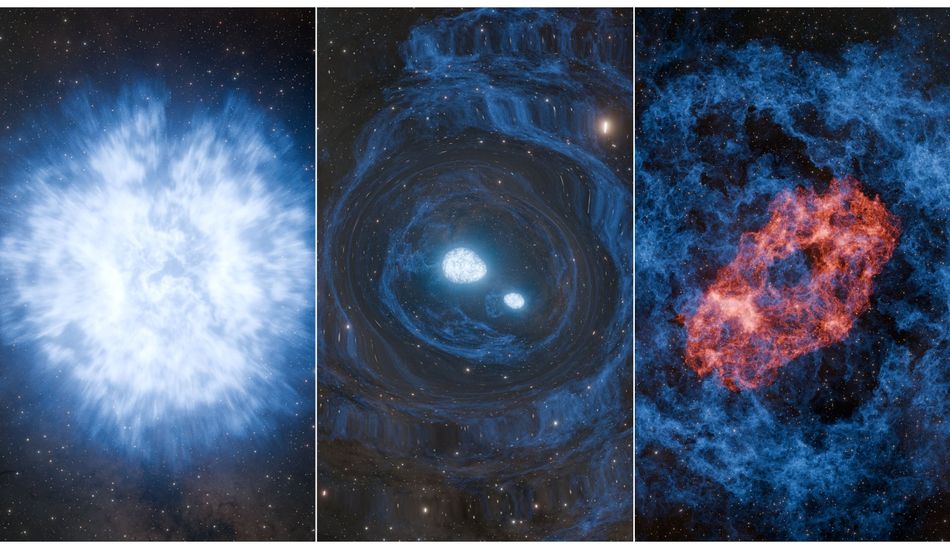
Recently, a bunch of brainy folks at the California Institute of Technology were scratching their heads over a super odd stellar explosion. They think it might just be a supernova and a kilonova all rolled into one. Picture this: a supernova goes off, and instead of just leaving behind a dead star, it births two neutron stars – these super dense cores that are practically dead. Then, these neutron stars get all cozy and merge, triggering a kilonova. If this is true, this thing, dubbed AT2025ulz, would be only the second kilonova we've ever spotted, and the first one that's formed in such a crazy way.
When these stellar explosions happen, they're not just pretty light shows. They're actually seeding the universe with all sorts of heavy elements, like carbon and iron. Kilonovas, on the other hand, release even heavier stuff, like gold and uranium – the very building blocks of new stars and planets. I always thought gold came from the earth!
These events create ripples in spacetime that detectors like LIGO can pick up here on Earth. We only caught a kilonova once before, back in 2017, also with LIGO. So, when the same facility sent out an alert about a similar signal this August, astronomers got pretty excited.
Almost immediately, another camera spotted some rapidly fading red light coming from the same spot, which is a sign of heavy element production from kilonovas. But then, a few days later, the source flared up again, this time in blue – more like a supernova. It's almost like the universe was messing with us.
According to Mansi Kasliwal, the lead author of the study and an astrophysicist at Caltech, it looked like the first kilonova for about three days. But then it started to look more like a supernova, and some astronomers lost interest. I can't blame them – science is hard! But not Kasliwal, she had too many unanswered questions about AT2025ulz to just write it off as a supernova. For starters, it didn't look like your average supernova, or even like the kilonova we saw in 2017. Plus, the gravitational wave data suggested that two objects had merged, and at least one of them was surprisingly light.
Brian Metzger, a theoretical physicist at Columbia University and co-author of the study, said that LIGO found a neutron star lighter than the Sun, which was something thought to be theoretically impossible. That's like finding a unicorn! Metzger thinks that these lightweight neutron stars might have been created when a rapidly spinning massive star split into two during a supernova. Then, all the chaos would force these baby neutron stars into a spiral that ends with a kilonova.
Of course, this is just one explanation, and the researchers admit that it needs more testing. After all, if AT2025ulz is a kilonova, it's only the second one we've ever detected. Kasliwal pointed out that future kilonova events might not look like the one we saw in 2017, and we might even mistake them for supernovas. "We don't know for sure that we found a superkilonova," she said, "but the event is still pretty mind-blowing." And you know what? I agree!
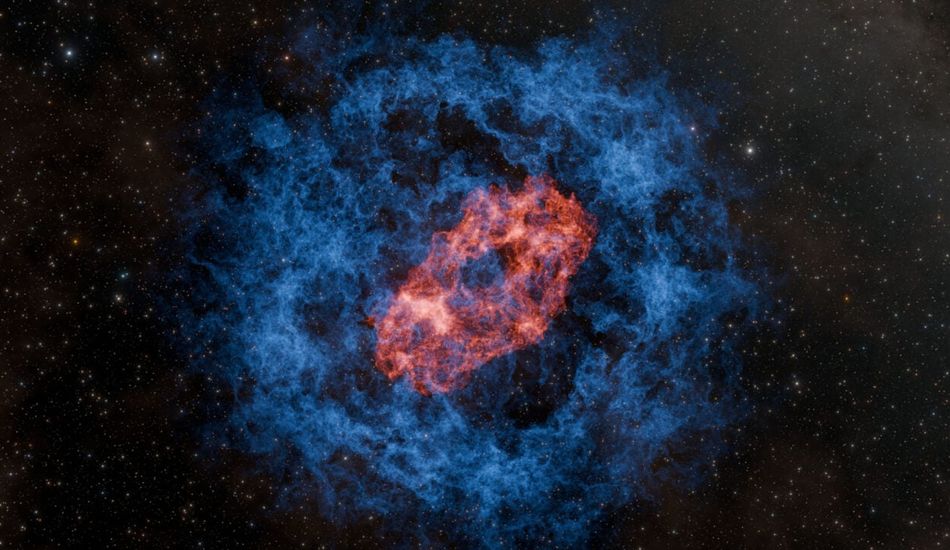
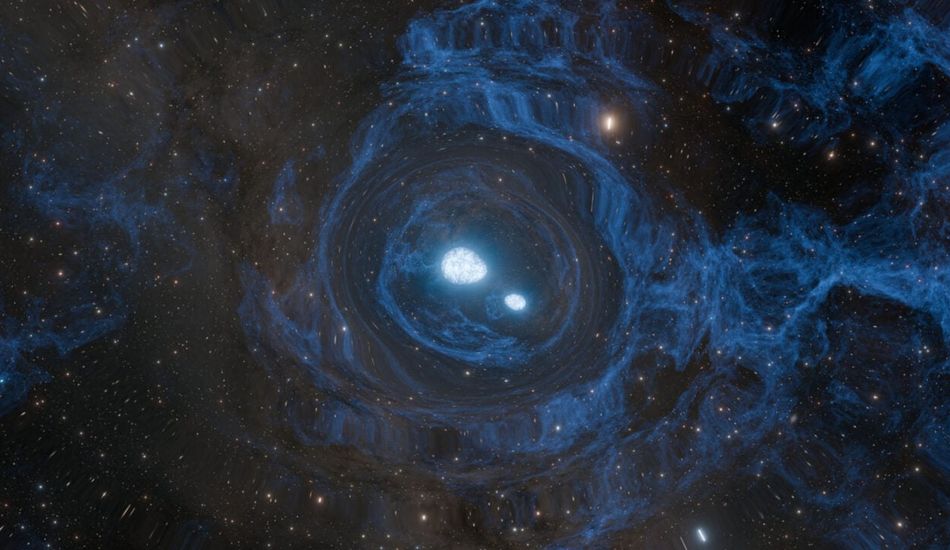
2 Images of Superkilonova:
Source: Gizmodo