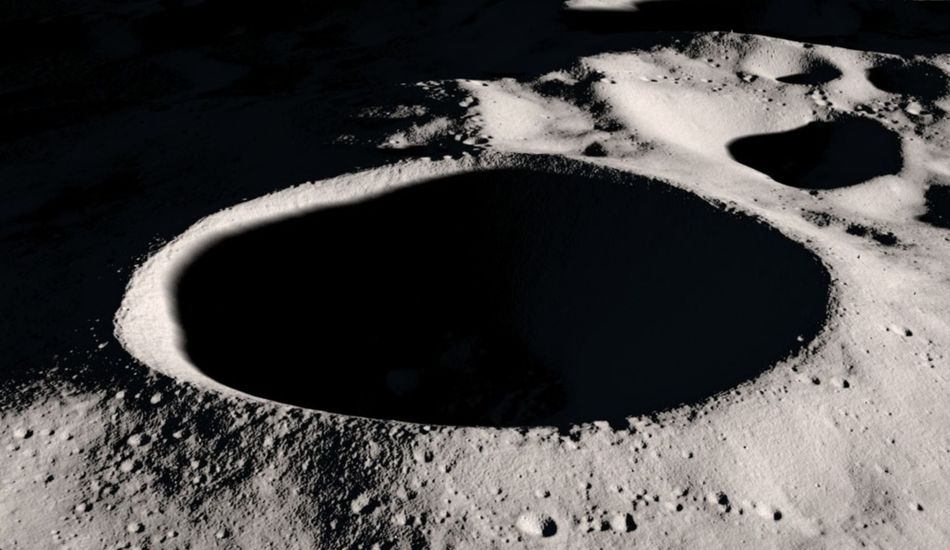
US and China Gear Up for Lunar Water Ice Race in Shackleton Crater
So, there's this crater on the Moon called Shackleton, and it's permanently dark inside. Spooky, right? But more importantly, scientists think it might be loaded with water ice. And that's a game-changer because water on the Moon means we could potentially have a lunar base where astronauts could live, and even produce rocket fuel, turning our natural satellite into a pit stop for missions further into space.
Now, things are getting really interesting. It seems the U.S. and China are both aiming to land spacecraft near the Shackleton crater this year. While they haven't announced official launch dates, there are strong indications that their missions are on track to launch soon. I'm talking about a real race to the Moon. Whoever gets there first could have a significant advantage.
From the U.S. side, Blue Origin is preparing for the first test flight of its Blue Moon Mark 1 (MK1) cargo lander in early 2026. This thing is huge, standing at 26 feet tall. If all goes well, it will be carrying NASA's VIPER rover to the lunar south pole in 2027, which will be tasked with looking for water ice inside Shackleton and other shadowed areas. What I am wondering is, if Blue Origin will manage to make it.
The MK1 lander is currently being tested at NASA's Johnson Space Center, where it's undergoing thermal vacuum testing to see how it handles the extreme conditions of space and the Moon's surface. Once that's done, it will be shipped to Kennedy Space Center for final assembly and integration with Blue Origin's New Glenn rocket. It's quite a process, but if everything goes smoothly, we could see a launch this spring.
However, China is pushing forward aggressively when it comes to lunar water ice exploration. Their Chang'e 7 mission is scheduled to launch in August, carrying an orbiter, lander, rover, and a "hopper" probe. This lander will also target the area near Shackleton crater. Since Blue Origin won't launch NASA's VIPER rover until 2027, China could get a year ahead in the search for lunar water. If the Chinese manage to extract Shackleton's water ice before NASA, it will provide them with a major advantage that could shift the geopolitical aspect of space exploration.
Of course, lunar landings are not simple. The terrain around Shackleton crater will be tough. If these ambitious missions actually happen this year, 2026 could be remembered as the year of the lunar water race.
Source: Gizmodo